What Actually Makes a Wood Fence Last in Manitoba
Two wood fences built the same summer in Winnipeg can look completely different a decade later, and almost none of that difference is the boards. What decides it is post depth below the frost line, drainage around the post, pressure-treated lumber in ground contact, a properly braced gate, and whether anyone ever cleans and refinishes it. Get the first three right and the fence stays straight. Get the last two right, and it stays looking good while it does.
Wood is still the most common fence material in Winnipeg, and for good reason. It gives you full privacy, it can be built in a dozen different styles, and it can be refinished when it ages, which is something no other common fencing material offers.
But wood is also the material where build quality matters most. A poorly built chain link fence is a slightly disappointing chain link fence. A poorly built wood fence leans, gaps, greys unevenly and looks tired years before it should.
So rather than another list of reasons to pick wood, here is what actually determines whether the wood fence you build in Manitoba ages well.
At a Glance
- Post depth below the frost line is the single biggest factor
- Water sitting against a post is what ends most wood fences early
- Compacted limestone gravel drains, where a concrete collar holds water in
- Pressure-treated lumber is not optional for anything near the ground
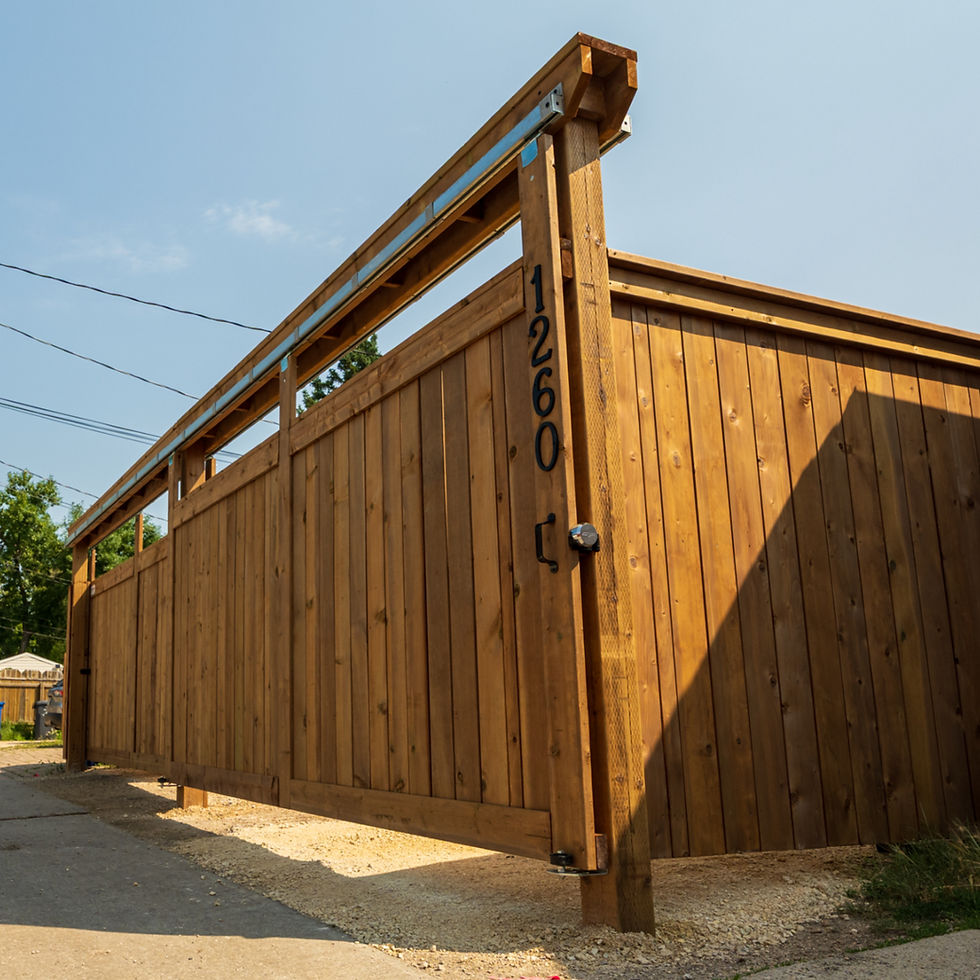
- Gates fail first, so how the gate is framed matters disproportionately
- Fasteners have to be rated for treated lumber, or they corrode
- Refinishing is what keeps a sound fence looking new rather than merely standing
- Keeping snow and leaf litter off the base costs nothing and helps a lot
What kills a wood fence in Winnipeg first?
The posts, almost always. Boards weather and grey long before they fail structurally, but a post that has moved or rotted at the base takes the whole section with it.
When someone tells me their fence is finished, I go and push on the posts. That is the diagnosis. Grey boards are cosmetic and fixable. Posts that move are not, and once several are moving, you are looking at replacement rather than anything else.
How deep do posts need to go in Manitoba ground?
Below the frost line, which in the Winnipeg area runs down to roughly four feet. Anything shallower sits in the layer of ground that lifts and settles every year.
This is the number I would ask about before anything else on a quote. It is also the number most easily shaved, because nobody can see it once the hole is filled. A fence with shallow posts looks identical to a fence with deep posts on the day it is finished. You find out the difference in year four.
Why does drainage around the post matter so much?
Because rot needs sustained moisture. A post that drains dries out between rainfalls. A post sitting in a concrete collar does not, because the collar has no way for water to escape.
This is why I set posts in compacted limestone gravel rather than concrete. Water runs through the gravel and keeps going down past the bottom of the post. It also means frost has far less to grip when the ground around it freezes and expands, which is the other half of the same problem.
Does the lumber itself make much difference?
Yes, but less than people assume, and only in specific ways. Pressure-treated lumber resists rot and insect damage, which matters most anywhere the wood is near the ground.
I build with pressure-treated material in a brown finish. It handles Manitoba conditions, it takes a stain well when the time comes, and it does not need to be painted to survive. Surface checking and small cracks are normal in treated lumber as it dries and cycles through seasons, and they are cosmetic rather than structural. Anyone promising you wood that never checks is describing a material that does not exist.
What maintenance actually extends the life of the fence?
Two things, and neither is difficult. Keep debris and piled snow off the base of the boards, and clean and refinish the fence periodically rather than never.
Leaf litter and mulch banked against the bottom of a fence hold moisture against the wood permanently, which is the same problem as a concrete collar in a different place. Clearing it takes minutes. Refinishing is more of a job, but it is what separates a fence that looks eight years old from one that looks new at eight. There is a full guide to timing and products in wood fence staining in Winnipeg.
Real Scenarios: Which One Sounds Like You?
Your fence is grey and weathered but completely solid.
That is a fence doing exactly what it should. Grey is oxidation on the surface, not failure. Push the posts. If they are firm, you have a cosmetic question rather than a structural one.
Your fence looks fine, but several posts move when you push them.
The opposite situation and the more serious one. Boards can look perfectly acceptable while the structure underneath has given up. This is what a replacement conversation actually looks like.
You are getting quotes, and every one says pressure treated.
Then that is not the differentiator. Ask about post depth, what the hole is backfilled with, how it is compacted, and how the gate is framed. Those answers separate the quotes.
You want the longest possible life and are willing to maintain it.
Then wood is a strong choice, because it is the one material you can genuinely refresh. Build it properly, refinish it on a sensible cycle, and keep the base clear. That is the whole programme.
Frequently Asked Questions
Do fence boards need to touch the ground?
Generally, you want a small clearance so the boards are not wicking moisture out of the soil year-round. If a dog makes that a problem, there are ways to close the gap that do not involve burying the boards.
Is cracking in the wood a defect?
Surface checking is normal in treated lumber going through Manitoba wet and dry cycles. It is cosmetic. Splits that run right through a structural member are a different matter.
Do fasteners really matter?
Yes. Treated lumber is corrosive to the wrong fasteners, and fasteners that corrode leave stains and eventually stop holding. It is a small cost that matters for a long time.
Should a new fence be stained right away?
New treated lumber usually needs time to dry before it will accept a finish properly. Rushing it means the product sits on the surface instead of soaking in.
Why do you keep talking about the gate?
Because it is the moving part. Everything else on a fence stands still, while the gate is under load and gets handled every day, so it shows up in build shortcuts first.
What makes wood worth choosing at all?
Privacy, style range, and the ability to refinish it later. I go through the case for wood in more detail in reasons to choose a wood fence.
Building a Wood Fence in Winnipeg? Ask About What You Cannot See
I came into this trade with a Civil Engineering Technology diploma from Red River College and more than ten years of building fences in Manitoba ground, and the thing that has stuck with me is how much of a fence's life is decided in the first day of work. If you want a wood fence built so that the boring parts are done properly, get in touch. That would be me on site, explaining exactly what goes in the hole.
A+ Fences builds new wood fences across Winnipeg and Southern Manitoba.
Antoine Leblanc
A+ Fences | Surround Yourself with Quality
204-250-8246