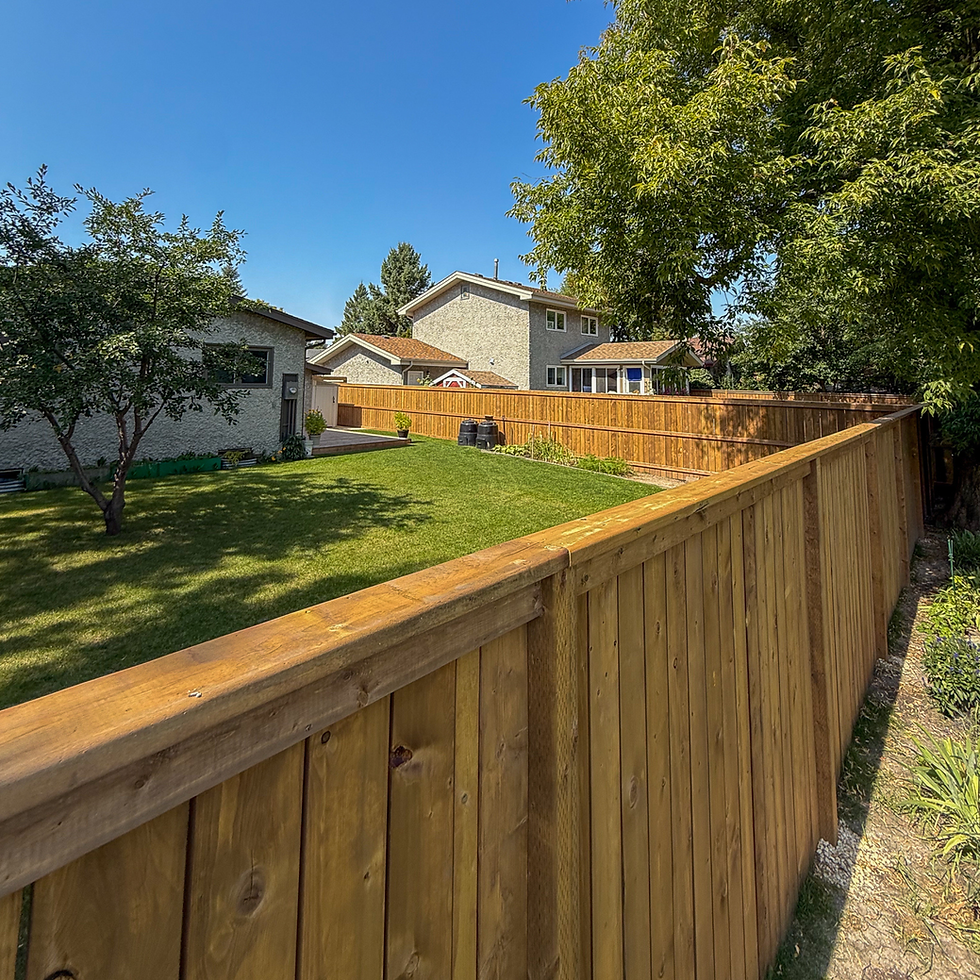
Fall Fence Prep in Winnipeg: Your Complete Winter-Ready Checklist for 2026
- 7 hours ago
- 6 min read
A few hours of fence prep before the snow flies is the difference between a fence that sails through a Manitoba winter and one that needs repairs come spring. The core tasks are clearing debris from the base, checking every post for movement, staining or sealing exposed wood before the first hard frost, and trimming back anything that could fall on the fence line under snow load. Do this in October, not December.
Winnipeg summers are short, and by the time the leaves start turning, most homeowners are thinking about everything except their fence. That is understandable. But a fence takes more punishment over a Manitoba winter than almost any other part of your property, and the prep work that protects it has to happen before the ground freezes, not after.
None of this is complicated. It is mostly inspection and a bit of cleanup, and it takes an afternoon. What it saves you is the cost, hassle, and disappointment of discovering in April that a post heaved, a board split, or a gate frame twisted over the winter.
Here is a complete rundown of what actually matters before winter sets in, and how to tell which parts apply to your fence.
At a Glance: Fall Fence Prep Checklist
Clear leaves, grass clippings, and debris from the base of the fence
Inspect every post for movement or leaning
Stain or seal exposed wood before the first hard frost
Tighten loose hardware on gates, hinges, and latches
Trim back trees and shrubs that could drop branches on the fence line
Check chain link tension and look for rust spots starting to form
Confirm gates still swing and latch properly before snow builds up around them
Take a few photos of your fence now, so you have a clear before-winter reference
When Should You Winterize Your Fence in Winnipeg?
The ideal window is October, after most of the leaves have dropped but before the ground freezes solid. Waiting until November or December means working around frozen soil and early snow, which makes inspection and any minor repairs much harder to do properly.
Why Manitoba Winters Are Hard on Fences
Manitoba's freeze-thaw cycle is one of the toughest environments a fence has to deal with anywhere in the country. The ground freezes deep, then shifts as temperatures swing through the winter and into spring. Wood expands and contracts with moisture and cold. Metal hardware contracts and can seize up. Snow load adds real weight to anything leaning against a fence line, and ice buildup around post bases is a common source of frost heave, which is when a post gets pushed upward as the ground around it freezes and expands.
A fence that goes into winter already weak, whether that is a soft post, a loose panel, or unsealed wood, comes out the other side noticeably worse. A fence that goes in solid usually comes out the same way.
Does Snow and Ice Actually Damage a Wood Fence?
Yes, but usually indirectly. Snow sitting against the base of boards holds moisture against the wood long after the surface looks dry, which accelerates rot over time. Ice buildup around posts contributes to frost heave. The damage is rarely dramatic in the moment. It shows up as soft spots, leaning posts, and shortened lifespan over the following seasons.
Clear the Fence Line Before the Snow Flies
Leaves, grass clippings, and general yard debris that pile up along the base of a wood fence trap moisture against the wood or metal. Once snow covers that debris, it stays wet against the fence for months. A simple rake-through along the entire fence line, clearing a foot of space on both sides where possible, removes most of that risk before it ever becomes a problem.
Should You Stain or Seal Your Fence Before Winter?
If your fence is due for staining, fall is a good window, provided you get it done while temperatures are still consistently above freezing during the day. A well-sealed fence sheds moisture instead of absorbing it, which matters most exactly when the wood is going to spend months buried in snow. If your fence was stained within the last year or two, you likely do not need to redo it; a quick visual check for fading or bare spots will tell you.
Check Every Post While You Still Can
This is the single most valuable thing you can do in the fall, and the easiest one to skip. Walk the fence line and put your weight against each post. It should not move. Any post that gives at the base is worth flagging now, while the ground is still workable, rather than discovering it in spring when repair options are more limited, and the ground is thawing unevenly.
What About Chain Link and Ornamental Fences?
Chain link and ornamental metal fences need less seasonal attention than wood, but they are not maintenance-free. Check for tension in the chain link fabric and look for any spots where rust is starting to form, since a small rust spot left through a wet winter tends to spread. For ornamental fencing, a quick check of welds and mounting points at the base catches most issues before they become structural.
Trim Back Anything That Could Fall on Your Fence
Overhanging branches are one of the most common causes of fence damage over a Manitoba winter. Heavy, wet snow adds significant weight to tree limbs, and a branch that snaps under that load can take out a section of fence on its way down. A fall trim of anything hanging near or over the fence line is cheap insurance against a much bigger repair.
Real Scenarios: What Kind of Fall Prep Do You Actually Need?
"My wood fence is a few years old and looks fine." Do the full walk-through: clear debris, check posts, inspect for fading that signals it is due for staining, and confirm gate hardware is tight. This is the baseline every wood fence needs.
"My fence is brand new this year." Newer fences still benefit from a debris clear and a post check, but likely will not need staining yet. Focus your effort on making sure gates are adjusted properly before the ground shifts, since a slight misalignment now can become a stuck gate by January.
"I have a chain link fence." Your prep list is shorter. Check tension, look for early rust, and make sure gate hardware still latches cleanly. Debris clearing still matters, especially where privacy slats or landscaping meet the fence.
"I noticed a leaning post or a soft board this fall." Do not wait until spring. A post repair in October, while the ground is still workable, is a far simpler job than the same repair in April when everything around it is thawing unevenly. Get it looked at now.
"I am planning a new fence for next spring." Fall is actually a smart time to book your estimate. See our guide on the best time of year to build a fence in Winnipeg for more on timing. Contractors have more flexibility before the spring rush, and you will be first in line when the ground is ready to build again.
Frequently Asked Questions
Do I need to do anything special for a fence with a pergola or privacy screen attached? Check that all mounting hardware is still tight, since the added weight and surface area can put extra stress on connection points during high winds and snow load.
Can I stain my fence in late fall if I missed the summer window? You can, as long as daytime temperatures are still reliably above freezing and the wood is dry when you apply it. Once temperatures drop consistently below freezing, stain will not cure properly.
Will a gate that sticks in the fall get worse in winter? Almost always. Ground movement and frozen hardware tend to make a minor sticking issue into a fully stuck gate by mid-winter. It is worth adjusting in the fall.
Do I need to remove snow from against my fence during the winter? Not urgently, but if snow is piling unusually high against one section, especially near posts, clearing it periodically helps reduce added stress and moisture exposure.
Is it too late to prep my fence if it is already November? No, but the ground gets harder to work with as it freezes. Focus on what you can still do easily: clearing debris, checking hardware, and a visual inspection of posts. Save anything requiring digging or ground work for spring.
How do I know if fall damage means I need a repair or a full replacement? If the issue is isolated, a leaning post, a stuck gate, a soft board, a repair is usually enough. If you are seeing multiple issues across the fence at once, it may be worth a professional repair or replacement assessment before winter fully sets in.
Antoine Leblanc A+ Fences | Surround Yourself with Quality 204-250-8246 antoine@aplusfences.ca
A+ Fences proudly serves Winnipeg and Southern Manitoba. If your fence needs a fall check-up before winter hits, reach out and we'll take a look.