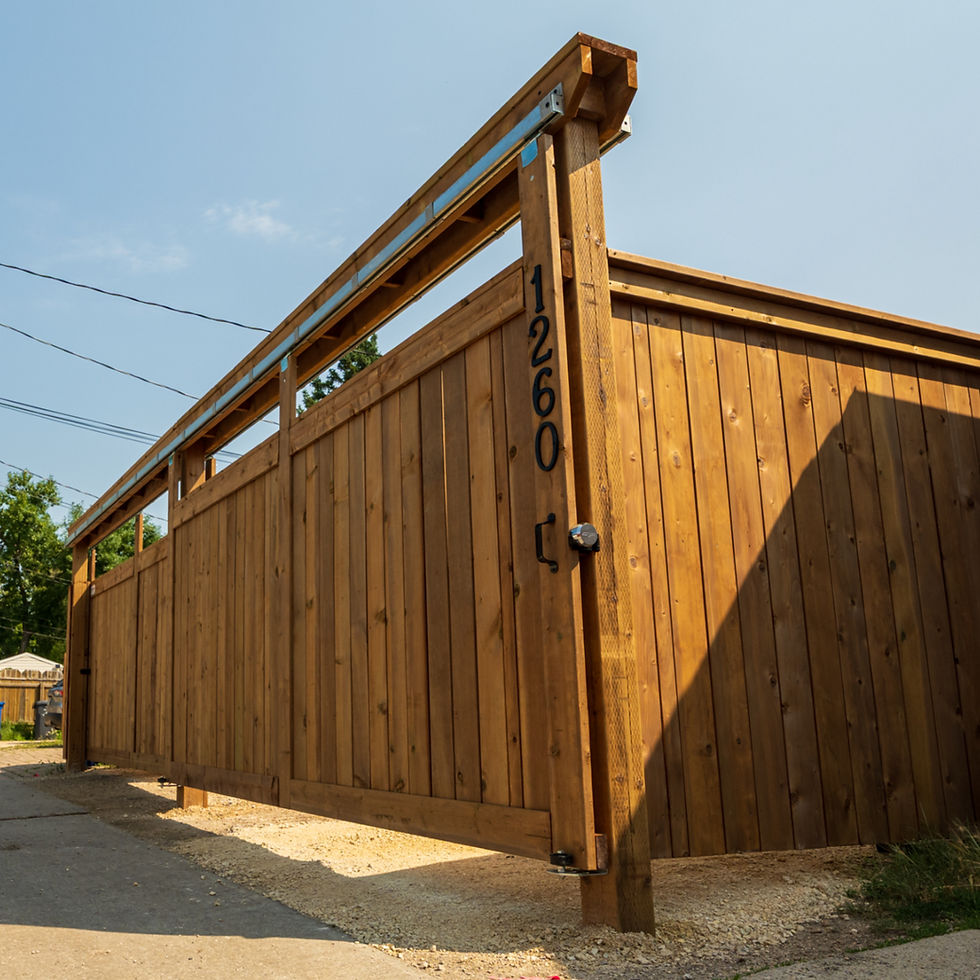
Horizontal Fencing vs. Vertical Fencing: Which Style Is Right for Your Winnipeg Home?
Two Great Styles, Two Very Different Looks
When most people picture a wood fence, they picture vertical boards running up and down in a straight line. That is still the most common style in Winnipeg, and for good reason. But horizontal fencing has been gaining serious momentum over the last few years, and homeowners are starting to ask whether the modern look is worth the difference. Here is an honest comparison of both so you can decide what is right for your yard.
Vertical Fencing: The Tried and Tested Classic

Vertical wood fencing has been the standard in Winnipeg for decades because it works. Boards run from the top rail to the bottom rail, standing upright in a clean, consistent row. It is simple to build, straightforward to repair, and suits every style of home from older character homes in River Heights to newer builds in Waverley West.
The key advantage of vertical fencing is that water drains off the boards naturally. Rain and snowmelt run down the face of the boards and away from the wood rather than sitting on top of them. This helps the fence dry faster after wet weather and reduces the risk of moisture-related damage over time.
Vertical fencing is also easier to repair. If a board cracks, warps, or rots, it can be swapped out individually without disturbing the rest of the fence. This makes ongoing maintenance more manageable and cost-effective over the life of the fence.
Horizontal Fencing: The Modern Upgrade

Horizontal fencing turns the boards on their side, running them from post to post rather than top to bottom. The result is a clean, contemporary look that feels more intentional and architectural than a standard vertical fence. It photographs well, complements modern home designs, and has become a popular choice for homeowners who want their fence to be part of the aesthetic of the property rather than just a boundary marker.
From a privacy standpoint, a tightly spaced horizontal fence delivers the same coverage as a vertical privacy fence. The boards sit flush against each other with no gaps, so there is no meaningful difference in how much they block from view.
What Are the Trade-Offs With Horizontal Fencing?
Horizontal fencing requires stronger, more widely spaced posts because the boards span a greater horizontal distance without the same built-in structural support that vertical boards provide by running directly from rail to rail. This means the post work is more important and the build is slightly more labour-intensive, which typically makes a horizontal fence a bit more expensive than a comparable vertical build.
Water is also worth thinking about. Because horizontal boards are flat and run parallel to the ground, moisture can sit on the top edge of each board longer than it would on a vertical board, where gravity pulls water straight down. In Winnipeg's climate, this makes choosing the right wood and finish important. Pressure-treated lumber handles this well, and a quality stain or sealant extends the life of the fence significantly.
Which One Is Right for Your Winnipeg Home?
If you want a reliable, low-maintenance fence that is easy to repair and suits any home style, vertical fencing is the safe and sensible choice. It is what most Winnipeg homeowners build for a reason.
If you want a fence that makes a design statement and adds a premium, modern look to your property, horizontal fencing is worth the additional investment. It takes more care to build correctly, but when it is done right, it looks exceptional.
At A+ Fences, we build both styles and are happy to walk you through the options in person. If you are unsure which direction suits your yard, we will help you figure it out.
Antoine Leblanc
A+ Fences | Surround Yourself with Quality